In practice, armed response vs alarm monitoring comes down to a layered plan that matches how the property is actually used. For homeowners comparing services in Pretoria, Pretoria East, Centurion and Gauteng, the strongest results usually come from combining sensible procedures, the right security layers, and a clear response path instead of relying on one dramatic fix.
For households in Pretoria, Pretoria East, Centurion and the wider Gauteng region, security decisions are usually shaped by daily routines: school runs, domestic access, remote work, deliveries, weekends away, and the simple desire to feel calm at home. That is why armed response vs alarm monitoring is not a purely technical question. It is an operational one rooted in behaviour, layout, timing, and the weak points that are easiest to ignore until an incident exposes them.
Many homeowners treat armed response and alarm monitoring as interchangeable, even though they solve different parts of the same problem. Confusing detection with response can create a dangerous gap: an alarm may activate, but without proper monitoring, verification, and escalation, the household may still be left to improvise under stress. Understanding the difference helps homeowners build a security stack where monitoring manages the signal and armed response manages the operational follow-through. This article breaks the issue down into practical steps, common mistakes, local considerations, and the point at which professional support becomes a sensible, soft next step.
Why This Security Issue Matters
The problem is usually straightforward: Many homeowners treat armed response and alarm monitoring as interchangeable, even though they solve different parts of the same problem. What looks like a minor gap on an ordinary Tuesday can become a serious exposure when routines change, attention is split, or a property is lightly supervised.
The agitation comes from the gap between assumption and reality. Confusing detection with response can create a dangerous gap: an alarm may activate, but without proper monitoring, verification, and escalation, the household may still be left to improvise under stress Once people assume a site is ‘basically covered’, they stop asking whether the layers actually support one another under pressure.
The solution is to shift from vague comfort to deliberate design. Understanding the difference helps homeowners build a security stack where monitoring manages the signal and armed response manages the operational follow-through That does not always mean spending more. It often means making existing layers work more intelligently, more consistently, and with clearer ownership.
Practical Steps Property Owners Can Take
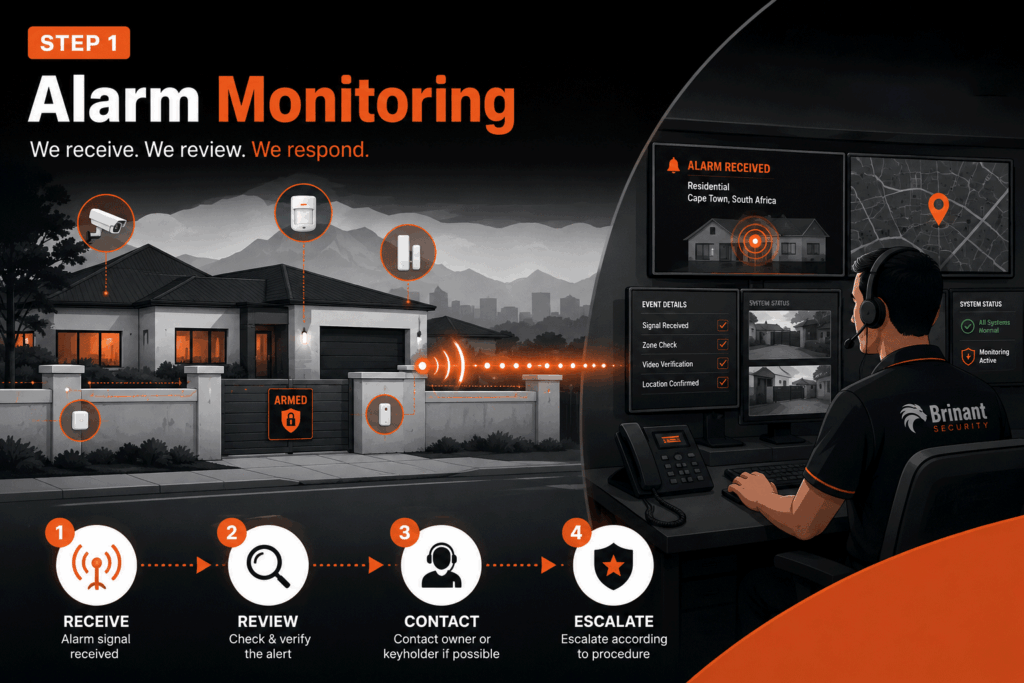
Understand what alarm monitoring actually does
Alarm monitoring is the layer that receives, reviews, and manages activation signals. It helps turn a beep into a process by contacting the client, verifying the event where possible, and escalating according to agreed procedures.
In South African suburbs with larger stands and multiple access points, the value of combining monitored alarms with physical response is often higher because verification and travel time both matter. In practical terms, ‘understand what alarm monitoring actually does’ works best when it is adapted to the property type, traffic pattern, and daily routine rather than copied from a generic online checklist.

Understand what armed response actually does
Armed response is the physical intervention layer. It is designed to deploy trained officers or patrols when an alarm, panic signal, or verified incident requires an on-site reaction.
South African households in clusters, estates, or mixed-use pockets often need a setup that can handle deliveries, visitors, and daily traffic without constant false alarms. In practical terms, ‘understand what armed response actually does’ works best when it is adapted to the property type, traffic pattern, and daily routine rather than copied from a generic online checklist.

Decide whether you need both layers
Many households in Pretoria and Centurion benefit from both because monitoring and response solve different problems. Monitoring helps manage information; response helps manage the physical risk on the ground.
Across South Africa, homeowners should ask for clarity on operating zones, dispatch logic, and how quickly an activation moves from signal to action. In practical terms, ‘decide whether you need both layers’ works best when it is adapted to the property type, traffic pattern, and daily routine rather than copied from a generic online checklist.
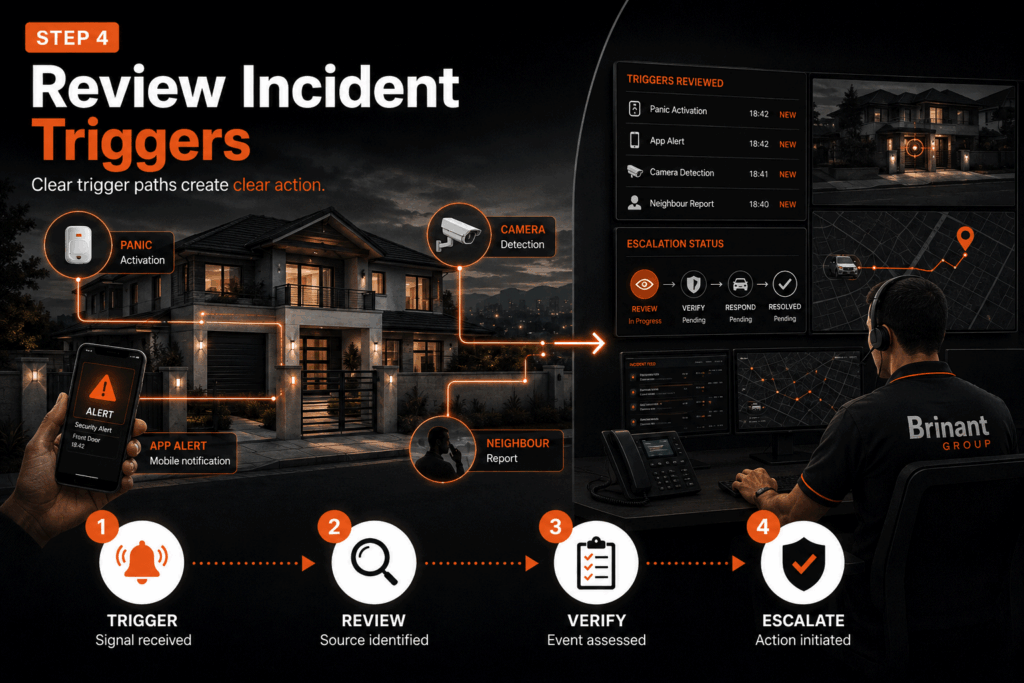
Review how incidents are triggered
Ask how panic activations, app alerts, monitored alarm activations, and suspicious activity from cameras or neighbours are escalated. If the trigger path is vague, the service will feel vague when it matters.
In South African suburbs with larger stands and multiple access points, the value of combining monitored alarms with physical response is often higher because verification and travel time both matter. In practical terms, ‘review how incidents are triggered’ works best when it is adapted to the property type, traffic pattern, and daily routine rather than copied from a generic online checklist.

Match the service to your lifestyle
Households that travel often, leave children with caregivers, or spend long days away from home usually need more than self-monitored notifications. Busy routines increase the value of professional escalation.
South African households in clusters, estates, or mixed-use pockets often need a setup that can handle deliveries, visitors, and daily traffic without constant false alarms. In practical terms, ‘match the service to your lifestyle’ works best when it is adapted to the property type, traffic pattern, and daily routine rather than copied from a generic online checklist.

Ask about operational hand-offs
The most important question is not just whether a service exists, but how cleanly one layer hands over to the next. A strong setup connects alarm triggers, operator workflows, and physical response without confusion.
Across South Africa, homeowners should ask for clarity on operating zones, dispatch logic, and how quickly an activation moves from signal to action. In practical terms, ‘ask about operational hand-offs’ works best when it is adapted to the property type, traffic pattern, and daily routine rather than copied from a generic online checklist.
Common Mistakes to Avoid
Choosing on price alone
The cheapest option can look attractive until you realise it excludes the very workflow you assumed was included.
Assuming a siren equals response
Noise may startle an intruder, but it does not replace a managed monitoring process or a dispatch capability.
Forgetting panic scenarios
Some incidents are not burglaries at all. Medical distress, driveway intimidation, or suspicious loitering may require different trigger options.
Not clarifying responsibility
If it is unclear who verifies, who calls, and who dispatches, the plan is incomplete.
Where Professional Security Support Fits In
Professional support fits in when homeowners want a joined-up chain rather than isolated products. Brinant’s context is useful here because the brand already presents alarm systems, off-site monitoring, armed response, and an app-based panic function as parts of one operating model. That makes the soft-sell conclusion practical: if you are comparing these services, the real decision is how detection and response will work together on your property.
That is where a soft, sensible next step often enters the picture: if the household has identified real gaps, it makes sense to connect those gaps to practical support rather than rely on luck. In Brinant’s context, the relevant service conversation is not about hard selling. It is about whether layers such as armed response, alarms, camera visibility, guarding, technical maintenance, or response support would make the plan more reliable for this specific environment.
Local Considerations for Pretoria, Centurion and Gauteng
In Pretoria East suburbs with larger stands and multiple access points, the value of combining monitored alarms with physical response is often higher because verification and travel time both matter. Centurion households in clusters, estates, or mixed-use pockets often need a setup that can handle deliveries, visitors, and daily traffic without constant false alarms. Across Gauteng, homeowners should ask for clarity on operating zones, dispatch logic, and how quickly an activation moves from signal to action.